
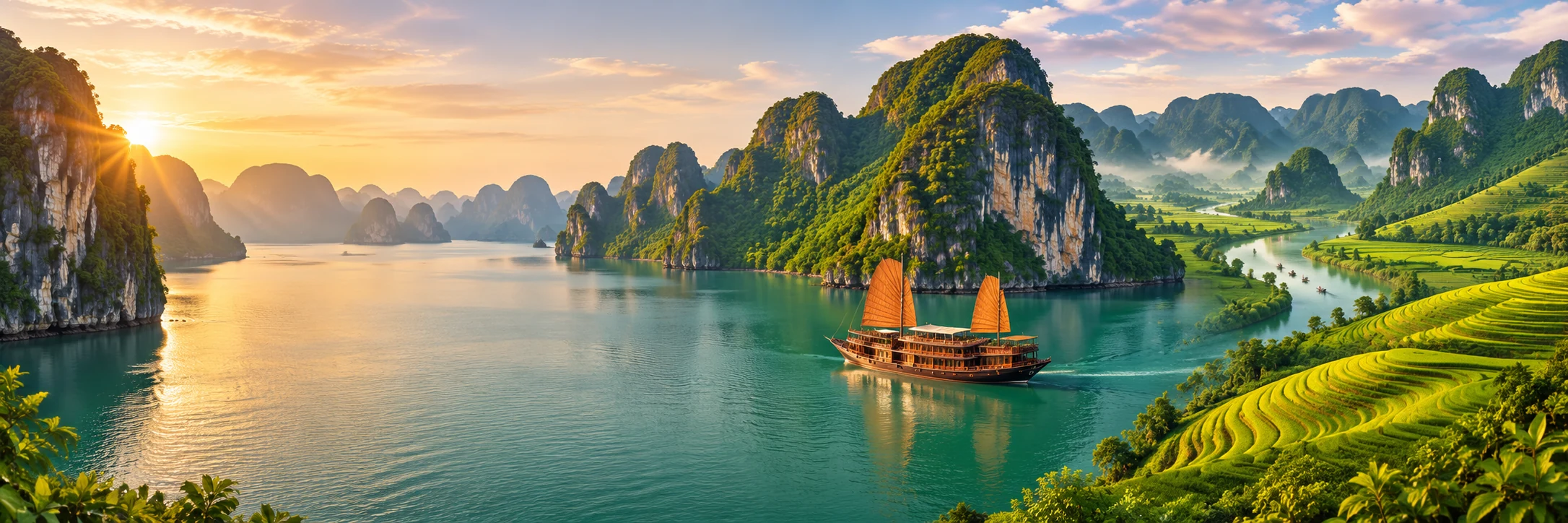
Is Son La and Moc Chau worth adding to a northern Vietnam itinerary? Yes—especially for travellers who prefer tea-country landscapes, seasonal fruit farms, gentler countryside walks and local food over another packed sightseeing city. Moc Chau is the most practical base for a short visit, while Son La City, Ta Xua and farther western routes require additional driving. For most visitors from Hanoi, two nights on the Moc Chau Plateau offer a better experience than a rushed day trip.
This Son La and Moc Chau travel guide compares tea, seasonal plums, Ban Ang and outdoor attractions; it distinguishes the 2024 National Tourist Area from the private Moc Chau Island glass bridge and provides realistic two- or three-day routes.
Where Is Moc Chau in 2026, and Did Son La Merge with Another Province?
Son La Province kept its provincial boundaries during Vietnam’s 2025 reorganisation. The June 2025 government announcement lists Son La among the provinces that were not merged. The local administration did change: from July 2025, former Moc Chau municipality’s lower-level units were reorganised into new wards and communes, including Moc Chau and Thao Nguyen wards, according to Son La’s official administrative report.
Moc Chau is not all of Son La Province. Son La City and Ta Xua require separate mountain routes; Mai Chau is in enlarged Phu Tho Province since 2025. Adjacent place names do not mean short transfers.
| Area | Most suitable experience | Time decision |
|---|---|---|
| Moc Chau Plateau | Tea farms, plum valleys, Thai village culture and gentle landscape stops | Two nights are ideal for a first visit |
| Mai Chau region | Valley lodging, stilt-house traditions and relaxed rural stays | Optional overnight on the approach or departure |
| Ta Xua | Mountain scenery, challenging roads and weather-dependent clouds | Plan extra mountain days, not a casual afternoon |
| Son La City and farther west | Urban history and onward northwest routes | Continue beyond Moc Chau with another road stage |
What Does Moc Chau National Tourist Area Status Actually Mean?
Moc Chau was officially recognised as a National Tourist Area in 2024. Vietnam’s Ministry of Culture, Sports and Tourism announced Decision 1077/QD-BVHTTDL dated 22 April 2024, recognising the wider Moc Chau tourism area associated with Moc Chau and Van Ho. This is a Vietnamese national tourism designation, not UNESCO World Heritage recognition.
Moc Chau Island is a private ticketed resort with Bach Long glass bridge, not an actual offshore island or a ticket to all nearby farms. Its operator sells different date-specific park and bridge tickets with height/child conditions.
Moc Chau Tea Hills: From Scenic Rows to Real Tea Production
Tea plantations are one of the plateau’s most characteristic landscapes. The Vietnam National Authority of Tourism describes cultivated green slopes and tea experiences, with visits to picking and processing activities generally promoted during the growing season. Heart-shaped tea hedges are a popular photo motif, but working tea estates are not automatically public parks.
An agreed producer visit can explain tea shoots, processing and tasting. Confirm the appointment, respect harvesting rows and ask before photographing workers; a scenic heart-shaped hedge is not automatically an open tea factory.
In a 3 November 2026 provincial report, a delegation toured Vinatea Moc Chau’s tea production and a Thao Nguyen dairy farm. It confirms functioning enterprises, not guaranteed tourist appointments.
For a gentle day, choose one tea viewpoint plus a prearranged tasting rather than several nearly identical photo stops.
Na Ka Plum Valley: Blossoms and Ripe Plums Are Different Trips
White plum blossoms and fruit picking happen in different seasons. The national Vietnam Tourism seasonal guide suggests roughly mid-January to late February for plum flowers and spring into May for fruit experiences, but weather makes the actual dates variable. A winter orchard can be beautiful without ripe plums; a May orchard full of fruit will not offer the same blossom photographs.
For a concrete recent example, Son La’s newspaper reported on 12 May 2026 that Na Ka Valley in Thao Nguyen ward was in its harvest period, with growers actively selling fruit. It is a real agricultural landscape, not an unlimited pick-your-own orchard. Ask a grower about access, picking permission, price per kilogram and safe areas for children before entering a field.
Blossoms and harvest dates shift with weather. If the orchard is not ready, choose tea and a village activity instead.
Ban Ang, Thai Culture and Meaningful Community Visits
Ban Ang pine forest and lake suit gentle walks and scenery. The national tourism guide describes neighbouring Thai stilt-house traditions; the village is a living community, not a tourist stage.
Arrange a paid, consenting local meal, weaving discussion or guide. Son La’s September 2026 reporting describes organised Thai experiences at Vat Hong, without guaranteeing a daily performance.
Ask before photographing people and homes. Discuss food allergies and host payment; see Haivenu’s respectful village visits guide.
Dai Yem Waterfall, Bat Cave or Bach Long Bridge: Choose by Fitness
Dai Yem Waterfall is an established visitor attraction, also cited in Son La’s May 2026 report. Flow varies with rain; obey barriers and avoid slippery rocks.
Dong Doi (Bat Cave) has around 240 steps to its entrance according to Vietnam Tourism. It is unsuitable as a default for travellers with knee or mobility limitations.
Bach Long Glass Bridge is an optional paid thrill, not mandatory for families. Check operator tickets, weather and age/height restrictions; the bridge fee differs from basic park admission.
| Option | Best for | Think twice if |
|---|---|---|
| Ban Ang lake and tea country | Gentle scenery, families and photographers | You need fully step-free routes without confirmation |
| Dai Yem Waterfall | Short nature walks and waterfall views | Heavy rain or slippery approaches |
| Dong Doi Cave | Travellers comfortable with stairs | Limited mobility or low stamina |
| Bach Long Glass Bridge | Optional paid thrills and panorama | Fear of heights or unsuitable age/height conditions |
Best Time to Visit: Tea, Blossoms, Fruit and Mountain Weather
Choose the season by experience: winter blossoms, late-spring plums, tea-country for much of the year, and greener but wetter summer waterfall scenery. Actual access and crops vary.
| Approximate season | Potential highlight | Not guaranteed |
|---|---|---|
| January–February | White plum blossom windows and cooler mountain air | Full bloom on your exact dates |
| March–May | Orchard activity and spring-to-early-summer plum harvest | Fruit picking without a grower’s permission |
| April–December | Tea-country views and possible organised tea learning | An open processing demonstration every day |
| Summer and early autumn | Green slopes and stronger waterfall flows | Dry mountain roads, safe waterfall paths or uninterrupted sunshine |
Bring a warm layer, rainwear and grippy shoes. Fog affects road visibility; heavy rain changes farm, waterfall and mountain-road access.
Getting from Hanoi to Moc Chau: Distance, Travel Time and Road Safety
Hanoi to Moc Chau is a substantial northwest road journey, not a short city excursion. The commonly used National Highway 6 corridor is roughly 190–220 kilometres depending on your hotel and destination. A realistic private-road allowance is often around 4–6 hours each way, with extra time possible for bends, traffic, rest breaks, rain and fog. These are planning estimates, not live navigation times; current restrictions and the exact drop-off must be checked before departure.
A private transfer helps with luggage and breaks; public coaches require terminal and last-mile checks. A Hanoi day trip can spend most daylight on the road.
Use an experienced mountain driver and travel in daylight when possible. Check updated routes and allow extra time in rain or fog. See Haivenu’s door-to-door travel-time guide.
A Realistic Two- or Three-Day Moc Chau Itinerary
Three days with two nights offer more countryside time after long transfers; the plan below is illustrative, not a confirmed departure.
Day 1: Hanoi to Moc Chau, then a light local visit
Day 1: Leave Hanoi early, check in and choose Ban Ang or a nearby tea viewpoint only if daylight and weather permit. Keep the evening relaxed.
Day 2: Tea production plus one seasonal experience
Day 2: Visit a booked tea producer, then choose a seasonal Na Ka orchard or safe Dai Yem waterfall route. Add a hosted Thai meal if genuinely arranged; do not force every stop.
Day 3: One optional activity, then return or continue west
Day 3: Choose a gentle cultural or dairy encounter if confirmed, then return to Hanoi or continue west with another road allowance. Ta Xua is not an afternoon add-on.
With one night, focus on tea and one nature or farm stop. Haivenu’s Vietnam with kids guide helps choose family pacing.
Moc Chau vs Mai Chau vs Ta Xua: Do Not Confuse the Routes
Mai Chau offers slow valley stays, Moc Chau tea and seasonal farming, and Ta Xua separate mountain roads and uncertain clouds. Vietnam Tourism emphasises cloud views depend on weather.
If staying in Mai Chau, Moc Chau can be a distinct extra night. For strenuous options, see Haivenu’s fitness-based adventure guide. Most short trips are better with one base.
Adding Moc Chau to a Haivenu Tailor-Made Northern Vietnam Tour
Haivenu’s published 3-Day Mai Chau Countryside Retreat (tour ID 168) is a two-night stay around Avana Retreat in Mai Chau. Another published option, the 15-Day Vietnam Family Cultural Tour (ID 165), also includes Mai Chau among its destinations. Neither itinerary automatically includes Moc Chau’s tea hills, Na Ka or Bach Long.
For a distinct highland extension, explore tailor-made Vietnam tours or use Plan My Trip. Provide your dates, party size and children’s ages, Hanoi pickup, available nights, tea or orchard interests, mobility and mountain-road comfort, accommodation preferences, onward destination and budget. A quotation should specify drivers, actual host appointments, visitor fees and bad-weather alternatives. An enquiry is not a confirmed booking.
Son La and Moc Chau Travel Guide: Frequently Asked Questions
Did Son La merge with another province in 2025?
No. Son La remained a province, although Moc Chau’s lower-level wards and communes changed in the July 2025 administrative reform.
Is Moc Chau a UNESCO World Heritage Site?
No. Its wide tourism area was recognised by Vietnam as a National Tourist Area in 2024. This is not a UNESCO World Heritage inscription or the same business as Moc Chau Island.
When can I see plum blossoms or pick plums?
Blossoms are generally a winter-to-early-spring highlight; ripe plums arrive later in spring. Na Ka had an active harvest in May 2026. Weather and orchard access determine actual opportunities.
Is two days enough for Moc Chau from Hanoi?
Yes, for tea country and one additional experience, provided you accept several hours on the road each way. Three days with two nights is more relaxed.
Can I visit Ta Xua on the same afternoon as Moc Chau?
It is not a sensible standard plan. Ta Xua is a separate mountain-road journey with weather-dependent cloud views; allow additional time.
Does the Moc Chau National Tourist Area ticket include Bach Long Bridge?
No single area-wide ticket is implied by national recognition. Bach Long is run by the separate Moc Chau Island operator, with date-specific prices and visitor conditions.
Moc Chau is most rewarding when the working landscape stays central to the experience. Give tea growers and fruit farmers time, visit community hosts with consent, and treat highland roads and seasons with respect. For a route adapted to your group, ask Haivenu for a date-specific Moc Chau itinerary.