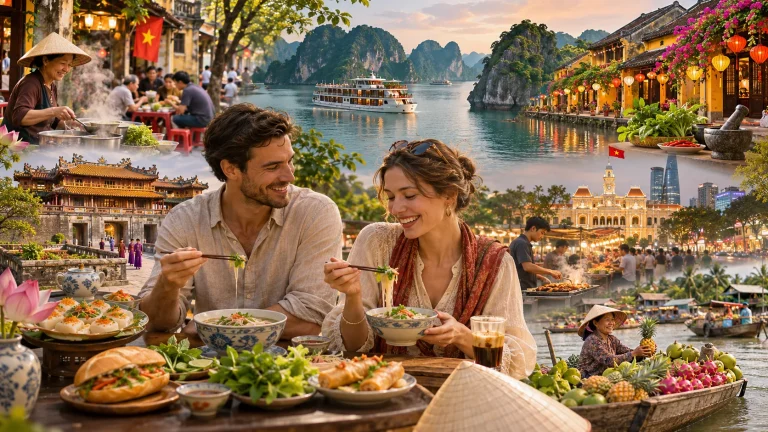


What should you eat in Vietnam on your first trip? Start with a comforting bowl of phở, choose bánh mì when you need a quick bite, and try a proper cơm (rice) meal or bún (rice-vermicelli) dish later. You do not need to tick off twenty famous foods in one day. Choose something that fits your appetite, the time of day and your dietary needs, then enjoy it without rushing.
This practical first-timer’s guide to what to eat in Vietnam is a meal-choice and ordering guide, not another list of every regional speciality. For where dishes originate and which cities are best for them, see Haivenu’s Vietnamese food guide by region. Here, the questions are simpler: What do I order now? What might be in it? How do I ask?
Your first Vietnamese meal: choose by appetite and situation
| What you want right now | Try looking for | Ask about first |
|---|---|---|
| Warm, gentle breakfast | Phở gà (chicken noodle soup) or phở bò (beef noodle soup) | Broth ingredients, meat and allergens |
| Quick lunch or between sights | Bánh mì (filled baguette) or xôi (sticky rice) | Pâté, pork, egg, peanuts and sauces |
| A filling seated meal | Cơm tấm (broken-rice plate) or another local cơm dish | Meat toppings, fish sauce and egg |
| Noodles without a large bowl of soup | Bún chả (grilled pork and vermicelli) or mì Quảng (regional noodles) | Meat, peanuts, shrimp and dipping sauce |
| Something crisp and shareable | Bánh xèo (savoury pancake) | Shrimp, pork, herbs and dipping sauce |
| A sweet finish | Chè (a family of sweet desserts) | Coconut milk, beans, ice, nuts and dairy |
This is an editorial ordering tool, not a guarantee that these dishes are available at every shop or suitable for everyone. Vietnam Tourism’s beginner’s street-food guide describes early morning noodle stalls, lunchtime eateries and small vendors that specialise in just a few dishes. Menus and serving times vary by neighbourhood and cook.
Eight Vietnamese foods worth recognising on a menu
1. Phở: a warming first bowl
Phở uses flat rice noodles in a fragrant broth. Phở bò typically has beef; phở gà has chicken. It is a familiar first breakfast, but broth recipes differ, and noodles being made from rice does not establish that the whole dish is allergen-free. If you prefer milder flavours, taste the broth before adding chilli.
2. Bánh mì: the easy handheld option
Bánh mì is a baguette filled to order. Traditional versions can include pâté, pork, mayonnaise, pickled vegetables, coriander and chilli, but fillings vary. A vegetable-looking sandwich may still contain pâté or egg. Ask about every filling if you have a restriction.
3. Cơm tấm: a hearty rice-plate choice
Cơm tấm uses broken rice, often served with grilled pork, pickled vegetables, egg or a pork-and-egg accompaniment. Fish-sauce dressing may arrive separately. It is an approachable sit-down meal in southern Vietnam; you can also simply look for cơm on menus when you want a rice meal rather than noodles.
4. Bún chả: grilled pork with noodles
Bún chả is associated with Hanoi and combines grilled pork, rice vermicelli, herbs and a dipping broth that frequently contains fish sauce. It is a good option if you prefer separate components rather than a large noodle soup. Ask what comes in the sauce instead of assuming the visible bowl tells the whole ingredient story.
5. Bún bò Huế: lemongrass noodles with character
Bún bò Huế comes from Huế and is known for a substantial lemongrass-scented broth. It may contain beef, pork components and shrimp paste. Not every serving is equally spicy; ordering không cay means requesting no chilli, but it does not remove paste or other ingredients already cooked into the broth.
6. Mì Quảng: less broth, more texture
Mì Quảng typically has turmeric-coloured noodles, a comparatively small amount of broth, greens and varied toppings such as chicken, pork, shrimp, egg or peanuts. The small quantity of liquid is part of the dish’s character. Don’t mistake it for a bowl of soup that has been served incorrectly.
7. Bánh xèo: a crisp savoury pancake
Bánh xèo is a savoury pancake, often filled with shrimp, pork and bean sprouts and served with herbs and dipping sauce. It is usually eaten in pieces with accompaniments rather than like a sweet breakfast crêpe. Check seafood, fish sauce and cross-contact if you have allergies.
8. Chè: not just one dessert
Chè covers many sweet snacks with beans, grains, jellies, fruit or coconut milk. Some are served hot; others include ice. Ask which ingredients and water or ice are used. If you would rather keep it simple, a hot tea or coffee can be an alternative.
The Vietnam National Authority of Tourism’s dish reference describes these foods and many other choices. The point of a first day is to learn which type of dish you enjoy, then explore the regional variations later.
Six useful Vietnamese phrases for ordering food
| Vietnamese | Plain-English meaning | When useful |
|---|---|---|
| Cho tôi một tô phở gà | One bowl of chicken phở, please | Ordering a familiar noodle dish |
| Không cay | Not spicy / no chilli, please | Asking for a milder serving |
| Tôi ăn chay | I eat vegetarian food | Explaining a dietary preference |
| Không nước mắm | No fish sauce | Checking a common animal-based ingredient |
| Bao nhiêu tiền? | How much is it? | Confirming a price before buying |
| Tính tiền, cảm ơn | The bill, please; thank you | Paying at a local eatery |
Pronunciation is tonal, and the person serving you may use different regional vocabulary. Point at the menu while speaking, be patient, and ask someone to write the ingredients down if needed. Vietnam Tourism’s street-food guide gives more ordering etiquette; its vegetarian guide explains ăn chay and không nước mắm.
Important: these phrases communicate preferences but cannot verify that a dish is safe for a severe allergy. Use an accurately translated written allergy statement and speak with the actual person responsible for the kitchen when necessary.
One-day food choices: three examples without a long tasting tour
These are illustrative choices, not booked restaurant stops or recommended opening hours. Pick what fits the city where you are staying and how you feel that day.
Arriving in Hanoi
Breakfast: try a freshly cooked, hot bowl of phở, checking the broth and toppings. Lunch: choose bún chả if suitable for your diet, or a cooked rice dish if you prefer. Evening: keep it flexible; one bánh mì or a simple cooked meal can be enough after a day of sightseeing. See the Hanoi travel guide for the broader city route.
Starting in central Vietnam
Look for a freshly prepared mì Quảng or, when in Huế, bún bò Huế if its ingredients fit your needs. Make the second meal a different format—perhaps cooked rice or a hotel-arranged dish—instead of comparing five noodle bowls. See Haivenu’s Central Vietnam guide for where these cities belong on a larger journey.
Beginning in Ho Chi Minh City
Cơm tấm is a practical first substantial meal. Later, look for hủ tiếu (a different southern noodle style) or a carefully chosen cooked dish; there is no requirement to eat from a roadside stall. The Saigon travel guide handles city sightseeing and neighbourhood planning.
Vegetarian choices, allergies and safe food: what matters most
Vegetarian preference is not the same as an allergy. Chay typically signals vegetarian-style cooking, but animal-based stock, fish sauce, shrimp paste, egg or shared cooking equipment may remain an issue depending on the kitchen. For a strict diet, explain ingredients one by one; if the cook cannot confirm, choose another meal.
For allergies to peanuts, fish, shellfish or other ingredients, avoid guessing from the dish name. The CDC Yellow Book’s Vietnam advice explicitly warns that many foods are unmarked and may contain those ingredients. Check stocks, sauces, garnishes and shared tools with a reliable kitchen. Removing visible shrimp or peanuts does not eliminate cross-contact. If the venue cannot answer, do not eat that dish.
For everyone, start with fully cooked food served hot, safe drinking water and clean utensils. The CDC’s 2026 food and water precautions caution against risky raw or undercooked foods, uncertain tap water and ice. The WHO’s Five Keys to Safer Food emphasise cleanliness, raw/cooked separation, thorough cooking, safe temperatures and safe water. A busy queue, a glowing review or a beautiful photograph does not certify a kitchen’s hygiene.
Where to go after your first Vietnamese meals
If one meal piques your curiosity, the next step is not to overload tomorrow with eight more dishes. Use Haivenu’s regional Vietnamese food guide to choose specialities that suit the cities on your route. If you want a guided tasting, market interpretation or cooking class, the separate food-focused trip planning guide explains what to confirm with a real provider.
Haivenu’s published 14-day Vietnam Culinary & Culture Private Tour is one wider route example. You can also Plan My Trip and share your travel dates, cities, group size, dietary needs and whether you want independent meals or arranged experiences. Dish suggestions here do not mean that any specific restaurant or food activity is already included or booked.
What to eat in Vietnam: first-timer FAQs
What is the easiest first food to try in Vietnam?
A freshly cooked phở bowl or a simple cooked rice plate is an approachable starting point for many travellers, provided the ingredients suit your needs. There is no single dish suitable for all diets.
Is bánh mì always vegetarian if I ask for vegetables?
No. Pâté, meat stock, mayonnaise and other ingredients may remain. Confirm each filling and sauce with the vendor.
Can I avoid spicy Vietnamese food?
Often yes: many dishes offer chilli on the side. Request không cay, but remember that some sauces and broths already contain chilli or other seasonings.
Is Vietnamese street food guaranteed safe if a stall is crowded?
No. Crowds are not a hygiene audit. Follow health-authority food and water advice, avoid risky raw foods, and choose a more reliable provider if uncertain.
Do I need a food tour to try these dishes?
No. You can order individual meals independently. A guided experience is useful when you want interpretation or cooking instruction, but it should be a deliberate choice, not a requirement.
Sources and fact-check notes
Reviewed 9 November 2026: Vietnam Tourism’s 21 Vietnamese dishes, beginner’s street-food guidance and vegetarian terminology; CDC Yellow Book 2026 – Vietnam, CDC food and water precautions and WHO food-safety principles. Dishes, ingredients, prices, kitchen access and vendor opening hours differ; verify the actual provider at the time of travel.